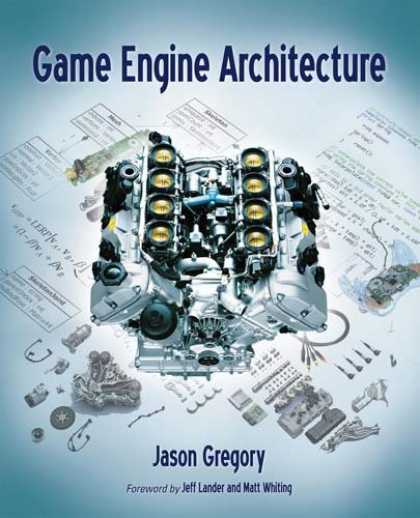
Game Engine Architecture Review

Game Engine Architecture - Jason Gregory

Game Engine Architecture - Jason Gregory

I’ve toyed around with building a very simple game engine over the last few months and made some progress in regards to the renderer of the engine but unfortunately during development, for every question I answered another 10 sprung up, with every new question and my frustration grew, and after the third re-planning of the engine core and the 4th rewrite, I gave into my frustration and just threw the engine on the back burner. Now why didnt I just get a book on game engines and move on from there, well I’ve read a few books on the topic of designing and creating game engines in the past, and they left me severely unimpressed and jaded, possibly some of the biggest wastes of paper out there  and I guess that’s one of the reasons I avoided looking for a new book on the topic and just gave up. Continue reading “Game Engine Architecture Review”

DirectX10 Tutorial 6: Blending and Alpha Blending

It’s been ages since my last DirectX 10 tutorial and I apologize, I’ve been buried under a ton of work and haven’t had much free time lately. This is going to be a very short tutorial on pretty much the final stage in the rendering pipeline: color blending. If you recall, each frame displayed on the screen is simply a bitmap that gets displayed and updated multiple times a second. This bitmap is called the frame buffer, now the frame buffer is technically the image we see at any given point and the back buffer (assuming you are double buffering) is what you actually draw to (referred to as your render target) and only once you finish drawing do you display the back buffer to the screen by swapping the frame buffer and the back buffer by using the Present member of the DX10 swapchain class.

Now think back to the depth testing tutorial where we displayed that cube and had to enable depth testing for it to render properly. Now a  cube is made up of 6 sides with 2 faces per side, so that is 12 triangles we have to draw for each cube. The graphical API draws one triangle at a time to the back buffer, and used the depth buffer to check whether it can overwrite a pixel in the back buffer if the new pixel to be drawn is in front of it. If this test passes then the API is given permission to overwrite that pixel’s value but its not as simple as that! Continue reading “DirectX10 Tutorial 6: Blending and Alpha Blending”